Home > Discography > Requiem
 

Requiem

Composed and Performed by Fariborz Lachini

Aug 2008
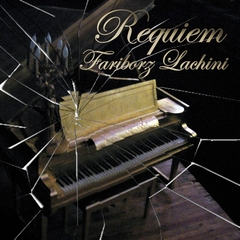
Requiem - Cover Art Buy FARIBORZ LACHINI: Requiem CD Buy FARIBORZ LACHINI: Requiem MP3 Buy FARIBORZ LACHINI: Requiem Music Score PDF  
# Play Track LengthMP3Sample ScorePDF
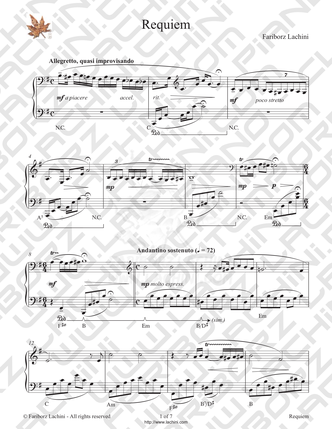
1 Requiem 7:44 MP3 Sample Music Score of Requiem - 7 Pages Music Score PDF
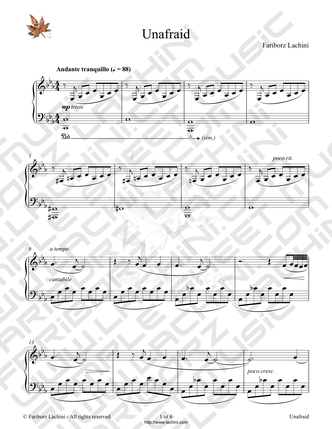
2 Unafraid 6:55 MP3 Sample Music Score of Unafraid - 6 Pages Music Score PDF
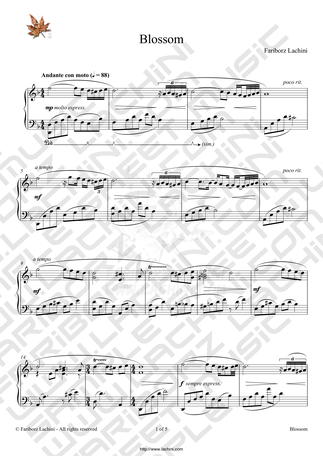
3 Blossom 6:22 MP3 Sample Music Score of Blossom - 5 Pages Music Score PDF
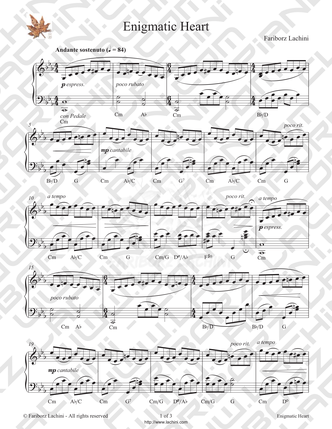
4 Enigmatic Heart 4:23 MP3 Sample Music Score of EnigmaticHeart - 3 Pages Music Score PDF
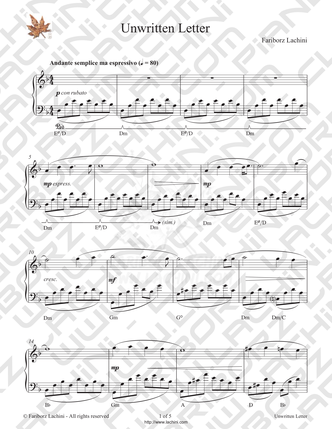
5 Unwritten Letter 5:56 MP3 Sample Music Score of Unwritten Letter - 3 Pages Music Score PDF
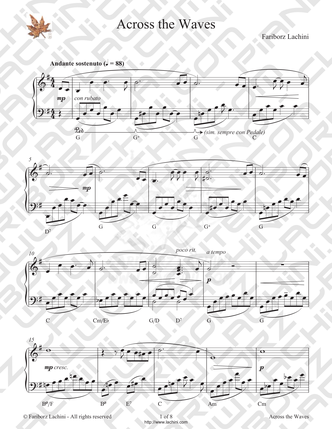
6 Across the Waves 9:18 MP3 Sample Music Score of Across The Waves - 8 Pages Music Score PDF
7 Dinner By Candlelight 7:16 MP3 Sample Music Score of Across The Waves - 8 Pages Music Score PDF
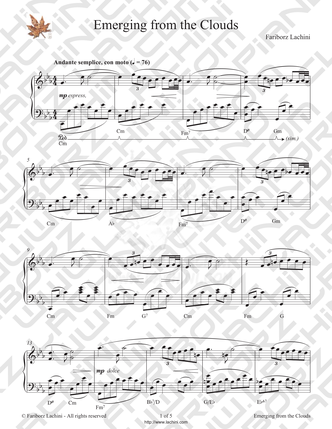
8 Emerging from the Clouds 6:40 MP3 Sample Music Score of Emerging From The Clouds - 5 Pages Music Score PDF


Liner Notes: Redefining minimalism

The one and only thing that bothers me about the music of Lachini is that I didn't find it sooner. I was first introduced to it in early 2008, and the quality and overall synthesis of the pieces blew my mind. And as I did more research about Lachini, his background and his music, the more interested I became. Put simply, these are pieces that are hard to believe are being written today. They're that ahead of their time.

Comparisons to contemporaries happen-as they often do-when it comes to trying to explain Lachini's music to those who are uninitiated. But it seems like the right adjectives aren't always there. Either way, it needs to be said: Steve Reich and Thomas Newman really have nothing on Fariborz Lachini when it comes to mindful reductivism in classical music. Although both composers do what they do very well, the frequent comparisons to Lachini's compositions aren't really the most accurate ones. True, both Reich and Newman fall along the lines of creating soundscapes for a new wave world. But minimalism, a benign enough term that's often been used to describe Lachini's compositions, is also a name that doesn't go far enough when talking about his music. Lachini, who is known and revered for his film compositions (and of course, the rest of his extensive body of work) for decades like Newman, stands alone with a gift for creating compositions that are so emotionally searing that it's easy to be curious about their sources. And while Lachini's compositions are vivacious, it's also obvious that they would easily succeed in every era-their origins even seem mysterious, as though the compositions were just discovered as sheet music in a tucked-away vault somewhere and had just been given new life.

Case in point: the "Requiem" album. This batch of neo-classical opuses would very easily be just at home in Europe at the turn of the century as it is in 2008, enrapturing audiences from all walks of life. This album also marks the first time he's venturing into the territory of a pure classical album. Lachini's background-he's Iranian but studied music in Paris-led to him learning how to combine aspects of music from his homeland with what he heard in Europe. The results, especially on "Requiem", are galvanic and vibrant. What he has created here is an intensity that translates across genres- which is proven by the fact that he's also managed to parlay this quiet but critical intensity into more than 100 film scores.

Vitality can come in a variety of forms, and with this album, you can set your expectations well beyond the typical classical music canon. You can anticipate subtlety, suspense and longing, too-all of which are genuinely lost arts in classical music.

--Stephanie R. Myers, New York City, August 2008


Requiem Reviews

“Requiem” is a stunning new solo piano collection from Iranian-Canadian pianist/composer Fariborz Lachini. Lachini has been experiencing a wonderfully creative period this past year, composing music in a classical style that imitates no particular composers or even specific classical eras. The music is more formal in structure, but Lachini’s emotional content is as powerful as ever. These classically-styled pieces are Lachini’s strongest and most entrancing works to date, and some are among the most beautiful pieces of music I’ve ever heard. Lachini’s playing is never flashy or overly-embellished, allowing the emotions and colors of the music to tell their stories, from the composer’s heart to the listener’s. With the world in such a troubled state, Lachini makes it clear that people of different cultures share the same emotions and feel the same pain and joy, demonstrating what a unifying force music can be. Lachini is able to pour his heart and soul into his piano music so completely that his themes become universal despite any language and cultural differences. His music will touch the hearts of anyone willing to listen.

One would be hard-pressed to find a more passionate or eloquent song of mourning in any genre of music than Lachini’s “Requiem.” The feeling of utter loss and emptiness flows throughout this piece, becoming deeply personal to anyone who hears it. Most of us have had these feelings at some time in our lives (hopefully not too often!), but only a few can express them with the depth and poignant beauty that Lachini has created at the piano. The intimacy and raw emotion of the piece speak a profound truth, and it is easy to visualize Lachini pouring his soul into the piano late at night, seeking solace in the soothing power of music. “Blossom” is lighter in mood and spirit, quietly celebrating the wonders of spring and the miracle that is a new flower. As in all of the marvels of nature, there is a tinge of sadness, and that emotion is communicated in this piece as well. The quiet melody and simple accompaniment rely on the passion of the playing to bring forth the colors and expression that tell the story. As the piece develops, it becomes embellished with trills that suggest the fluttering of a butterfly’s wings or perhaps a hummingbird’s flight around the blossom, or even a gentle breeze that causes the petals to flutter. Regardless, the musical scenario is one of perfection and wonder, and the piece is a delight for the ears. “Unafraid” is my favorite of Lachini’s works so far. Very contemplative and deeply emotional, “Unafraid” begins with just a hint of Beethoven’s “Moonlight Sonata,” but moves into the present after the first few bars, played with Lachini’s distinctive emotional power and passion. The piece is tinged with sadness, but it also conveys hope and perhaps humility, looking toward the future as well as reviewing the past with honest self-examination. “Enigmatic Heart “ is darkly beautiful and compellingly honest, speaking of tragic loss and grief. Many composers manipulate the listener with over-the-top theatrics, but Lachini composes from an inner place that expresses only the truth. The piece is not without hope, but the mood is definitely somber and pensive. Some of the words that came to mind as I was listening to “Emerging From the Clouds“ included “graceful,” “elegant,” and “sad.” The simplicity of the notes in this piece make it very easy to understand and relate to, but the emotional impact comes from the powerful sensitivity of the artist playing the music.

Sure to be an international hit, “Requiem” is available from www.lachini.com, amazon.com, and iTunes. I give it my highest recommendation!

Kathy Parsons
Mainly Piano.com


9/21/08


Once, in a classical music course I was taking in college, the professor made a bold declaration -- "there are those who feel and connect with the music of Philip Glass," he said, leaving room for a dramatic pause, "and those who don't." Truer words never spoken. If, as a listener of instrumental music, you've ever found yourself in the former category, you're in for a treat with Lachini's "Requiem" The kind of minimalism that Glass exemplifies shines through in this piece, putting Lachini in the category of a someone who's mastered not only the genre but also the sentiment that runs behind it. Like much of Glass' canon, it's bittersweet, sure -- but it's so far down the sweet end of the spectrum that it's hard to imagine that it's much of anything close to bitter.

Stephanie R. Myers
4/14/2008


Réquiem del compositor y pianista iraní Fariborz Lachini evoca en su melodía la pérdida de algo amado. Además de su nombre en el que la palabra réquiem cobra un sentido diferente al usualmente acostumbrado en las composiciones tradicionales en las que se musicalizan textos bíblicos para la misa de alguien que ha muerto, el uso de la tonalidad menor por parte de Lachini, así como el carácter nostálgico, logran que esta pieza evoque melancolía, una sensación innegable por parte de un músico que sabe transmitir las emociones a través del piano, una capacidad que consagró a los grandes compositores de la historia como el caso de F. Chopin y F. Liszt, músicos con quienes Lachini ha sido relacionado en diferentes ocasiones. El carácter afligido de Réquiem por un amor cautiva al oyente por su profundo sentimiento que de alguna manera se identifica con el sentimiento nostálgico que existe dentro de cada ser humano, un sentimiento de apropiación que quizá se puede comparar con la nostalgia que lograron transmitir los tangueros durante los primeros años del siglo XX.

Por Andrea Baquero
MusicBlogSpace
4/19/2008

Requiem by the Iranian composer and pianist Fariborz Lachini evoques in its melody the loss of something loved. Furthermore than its name in which the word requiem has a different meaning than the usual in the traditional compositions in which it’s a musicalization of a biblical text for the mass for a dead person, the use of minor tonality by Lachini as well as the nostalgic character of the piece, manage to evoke melancholy, an undeniable feeling from a musician that knows how to transmit feelings through the piano, a talent that consecrated the great composers of all times, like F. Chopin or F. Liszt to which Lachini has been compared in several times, had to experience. The afflict character of Requiem captivates because of the profound feeling that in a way identifies with the nostalgic feeling that exists inside every human being, a feeling of belonging that one may compare with the nostalgia that tango transmitted in the first years of the XXth century.

Andrea Baquero
4/19/2008


Fariborz Lachini’s work is pregnant with the type of meaning and emotion that could only originate from the type of man who left his home country for the sake of creating music. Heavy with emotion but never burdensome, Lachini’s “Requiem” harnesses deep feelings of truth.

Lachini’s approach to this track reveals the absolute power of understatement. Songs of mourning and loss have a gross tendency for excessive exaggeration but this track glides along poignantly without unnecessary ostentation. Striking and precise, the track’s climax occurs with vehemence. Rumbling piano solos give way to emptiness and stunning dramatics as the track illustrates the waves of emotion that ensue after loss. At the track’s end Lachini’s piano simply fades out like the hushed wind at a grave, or the ability to finally move on after becoming accustomed to living with loss.

Perhaps most important, this piano solo is triumphant in its ability to convey the complex emotions that accompany loss. Elegiac but also seductive, Lachini demonstrates that even though loss can be painful, life moves on and we may still live to tell about our love.

Lauren Proctor
4/14/2008


Prior to pressing the play button, the listener is drawn into the lush notes of the piano. The mood of the song brings to mind a romantic yet somber tone, which speaks to the heart, and teases the soul, while urging the ears to stand at attention and collect every morsel of musicality seeping from this beautiful work. While soaking in a bath tub of warm fragrant water reflecting love once loss, or seated at a bistro dining by candlelight, just feet away from your significant other, Lachini's chivalrous yet enticingly painful melody, will evoke passion, sadness, and a deep appreciation for every note being played. The tempo sets the mind at ease, yet the melody tugs at the heart strings and leaves the listener wanting for more. Lachini unflinchingly relays his message, while oozing all the complex simplicities, that are love, and for that I urge any patron of excellent taste to check this out.

Ebony Moore
4/13/2008

“Requiem” track is a stunning new piano solo from Iranian- Canadian pianist/composer Fariborz Lachini. Released as a single, one would be hard-pressed to find a more passionate or eloquent song of mourning in any genre of music. “Requiem” is very classical in structure, inviting comparison to Chopin’s many elegies and other pieces that contemplate life’s darker and more painful sides. However, Lachini’s sensibilities are in today’s world, which is also filled with sadness and difficulty. Deeply affected by the state of music in his native homeland, Lachini’s Requiem could commemorate the death of any of the many of kinds of love. The feeling of utter loss and emptiness flows throughout this piece, becoming deeply personal to anyone who hears it. Most of us have had these feelings at some time in our lives (hopefully not too often!), but only a few can express them with the depth and poignant beauty that Lachini has created at the piano. The intimacy and raw emotion of the piece speak a profound truth, and it is easy to visualize Lachini pouring his soul into the music late at night by the light of a single candle, seeking solace in the soothing power of music. “Requiem For a Love” is very possibly Lachini’s strongest and most beautiful piece of music to date and is available for download at www.lachini.com. This is a must-hear piece of music, and I give it my highest recommendation.

Kathy Parsons
MainlyPiano.com
3/19/08


“Unafraid” is one of a collection of gorgeous new classically-styled piano solos by Iranian-Canadian composer/pianist Fariborz Lachini. The collection features some of Lachiniآ’s strongest and most beautiful work to date and will be released as a CD in the near-future. “Unafraid” is my favorite of Lachiniآ’s works so far, and I find it even more touching and compelling than his incredible “Requiem For a Love.” What an amazing period of creativity Lachini is experiencing! Very contemplative and deeply emotional, “Unafraidآ” begins with just a hint of Beethoven’s “Moonlight Sonata,” but moves into the present after the first few measures. The styling of the piece is contemporary with classical structure and sensibilities, played with Lachiniآ’s distinctive emotional power and passion. Most of Lachiniآ’s music is touched with sadness or melancholy, and this one is, too, but it also conveys hope and perhaps humility, looking toward the future as well as reviewing the past with honest self-examination. Lachini’s playing is never flashy or overly-embellished, allowing the emotions and colors of the pieces to tell their stories, from the composer’s heart to the listener’s.

Kathy Parsons
2008-04-29


"Unafraid" has a pensive meditative mood about it. Lachini plays with such patience, and discipline, and is sure not to rush this simple masterpiece. Unafraid has such a rare virtuosity to it that it can be played for a myriad of situations. The sheer relevance of this piece is outstanding, considering it perfectly matches any mood or emotion. The song progresses steadily and allows the listener to emotionally adapt to the piece. Lachini further indulges the ear by making his works more than just songs; his musical works serve as profound artistic fixtures that speak to the lover in us all.

Ebony Moore
2008-04-14


Warning: the following analogy might be slightly imperfect, but it is also somehow rather comfortably fitting (sort of like a favorite sweater you refuse to get rid of). Onward with the metaphor: This piece, to me, is akin to looking down the very top edge of a canyon, recognizing the chasm, feeling the trepidation and deciding to go ahead anyway, parachute on down and face it all head-on. The song is becomes a strangely valid motivator, somehow. But, bottom line -- -- I'm not to be held responsible for the changes in your life you might decide to make while you're listening to this piece.

Stephanie R. Myers
2008-04-16


Fariborz Lachini is in the midst of an incredibly rich composing period, pairing classical music styles with his own melodic gifts and deeply emotional musical storytelling. “Blossom” follows the stunning “Requiem” in this classical series with a piano solo that is lighter in mood and spirit than the “Requiem,” quietly celebrating the wonders of spring and the miracle that is a new flower. As in all of the marvels of nature as well as life itself, there seems to be a tinge of sadness, and that emotion is communicated in this piece as well. “Blossom” begins with a quiet melody line and simple left hand accompaniment that rely on the passion of the playing to bring forth the colors and expression that tell the story. As the piece develops, it becomes embellished with trills and more dynamics. The trills suggest the fluttering of a butterfly’s wings or perhaps a hummingbird’s flight around the blossom. Or perhaps it suggests a gentle breeze that causes the petals of the blossom to flutter. Regardless, the musical scenario is one of perfection and wonder, and the piece is a delight for the ears.

Kathy Parsons
2008-04-29


Blossom displays Lachini's incredible skill. The playing is light, crisp, and excellently fluid. The romantic eloquence that drips from this piece evokes thoughts of a summer night in an opulent castle. It has a magical, childlike dreamscape feel to it, and brings to mind a delightful picnic with a new love. This magnificent composition is not only refreshing, it majestically conveys the feeling of timeless happiness. This song further solidifies the notion that Lachini is a musical force to be reckoned with, and is sure to bring the listener a blissful experience.

Ebony Moore
2008-04-14


While "Blossom" doesn't necessarily evoke the typical feelings that might be associated with springtime, its structure manages to evoke the season perfectly just the same. The piece takes initially sparse piano instrumentation and, by the middle, subsequently blooms it into a lush, provocative sound that carries the song. And lest you think that the spare sound is akin to something sterile, fear not -- while this is an instrumental piano piece, it also shows influences from all over the map. (Its opening is even akin to the bordello piano of Berlin-era Lou Reed.) It's hard to dislike spring -- and similarly, it's hard to dislike "Blossom."

Stephanie R. Myers
2008-04-15


"Enigmatic Heart" is the fourth in a series of stunning pieces composed in a classical style by Iranian/Canadian composer Fariborz Lachini. Darkly beautiful and compellingly honest, this piano solo seems to speak of tragic loss and grief. Many composers manipulate the listener with over-the-top theatrics, but Lachini composes from an inner place that expresses only the truth. The piece feels like it could have been composed late at night, perhaps by candlelight or the light of the moon, when reflection is the deepest and emotions flow freely. The piece is not without hope, but the mood is definitely somber and pensive. While Lachiniآ’s playing style is not flashy, his expressive touch perfectly conveys the wide range of emotions and human experiences he incorporates into his music. With the world in such a troubled state, Lachini makes it clear that people of different cultures share the same emotions and feel the same pain and joy, again demonstrating what a unifying force music can be.

Kathy Parsons
2008-05-10


"Enigmatic Heart"’s melodic magnificence will take your breath away. Never will you experience a work, played with such lightness, but be so weighty with emotions. It has a nostalgia about it that enthralls the mind and allows the listener to think past the current moment, and truly relate to the music. Like so many other Lachini masterpieces, this song allows the listener to relate spiritually to every note, and effectively conveys the mood of the song. It spawns a subtle rapture, a musical form of love at first site, and proves to be a beautiful work of art.

Ebony Moore
2008-05-02


It's almost startling how Lachini is able to pin down moods so rawly and still somehow make it musically engaging to listen to -- and that's without ever being stifling or stuffy. But he's done it again here with "Enigmatic Heart" a composition that uses piano as practically its own voice in the piece. Score one for composers who can use instruments as their lyrics without ever saying a word.

Stephanie R. Myers
2008-05-01


Several words came to mind as I was listening to "Emerging from the Clouds" a few of which included “graceful,” “elegant,” and “sad.” The simplicity of the notes in this piece make it very easy to understand and relate to, but the emotional impact comes from the powerful sensitivity of the artist playing the music. Fariborz Lachini is able to pour his heart and soul into his piano music so completely that his themes become universal despite any language and cultural differences. All people have felt the emotions he expresses so beautifully and his music can touch the hearts of anyone willing to listen. Lachini has been experiencing a wonderfully creative period this year, composing music in a classical style that imitates no particular composers or even a specific classical era. The music is more formal in structure, but Lachiniآ’s emotional content is as powerful as ever. These classically-styled pieces are the strongest and most entrancing of Lachiniآ’s music that Iآ’ve heard and are some are among the most beautiful and compelling music I’ve ever heard, period.

Kathy Parsons
2008-05-10


"Emerging from the Clouds" is a wondrously fluid ballad. Its composition is similar to a well constructed chأ¢teau; every line of notes further strengthens the piece. Once again Lachini’s style of simplicity allows the listener to really delve into the musical decadence that is this piece. Lachini masterfully proves that less is more, without overt and unnecessary frills, this piece remains exquisite and one gets the feeling that they are experiencing a musical rarity. This song provides a lush ambience for any listener and is sure to be a favorite amongst anyone who listens. Played with such maturity and patience this song is simply brilliant.

Ebony Moore
2008-05-02


Growing up, there was a local radio station that played big band music that I absolutely loved. I always said I felt like it lowered my blood pressure with its smooth, completely unjarring songs. Although Lachini's "Emerging from the Clouds" is, of course, from a decidedly different genre, the sentiment is the same -- cascading, gentle and low-key enough to physically change your vital signs. Skip the apple a day and try this instead.

Stephanie R. Myers
2008-05-01


Orignial Classical Solo Piano - Requiem for a Love by Fariborz Lachini - Classical Romantic - Neo-Classical